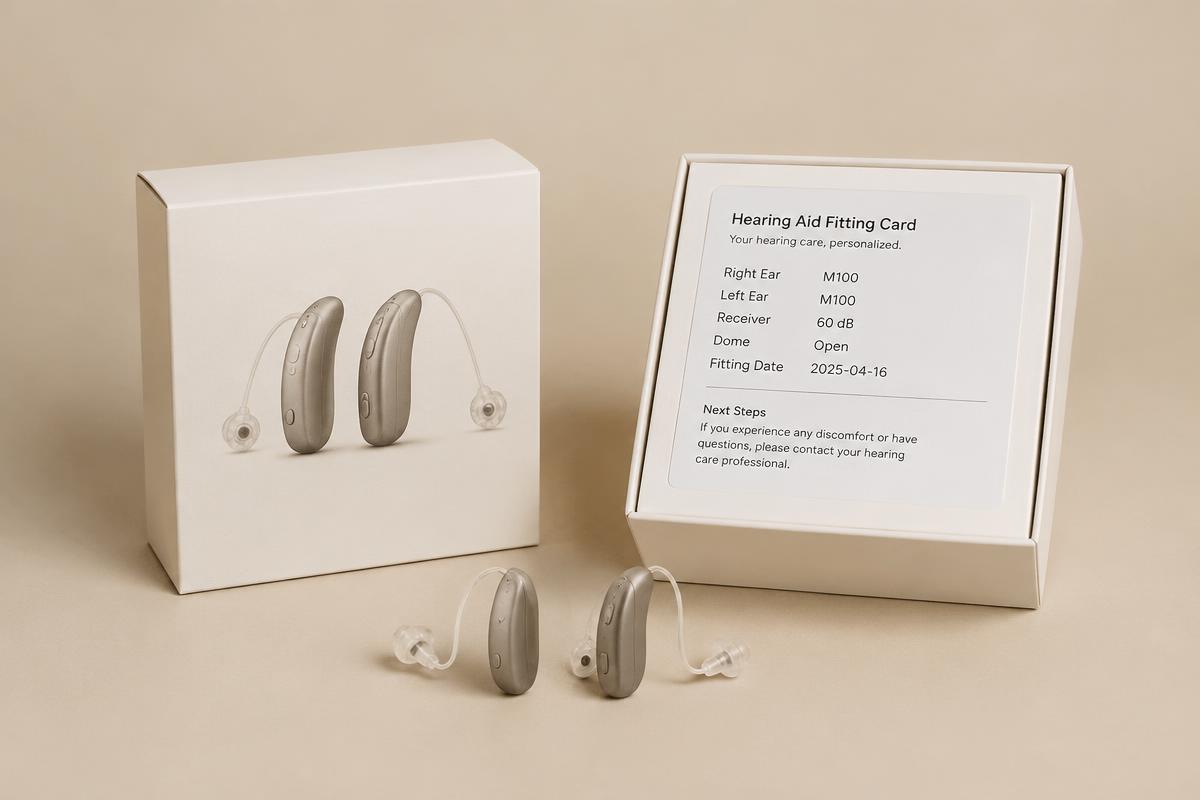
Over-the-counter hearing aids made the category cheaper and more visible. They are a genuine option for some people and the wrong tool for others.
What over-the-counter covers
These devices are intended for adults with perceived mild to moderate hearing loss. You buy them without a hearing test and tune them yourself, usually through a phone app. Prices typically sit well below prescription models.
Where prescription devices differ
Prescription aids are programmed to your audiogram frequency by frequency, can be fitted for severe and profound loss, and are adjusted by a professional over the life of the device. They also carry manufacturer warranties, loss coverage and repair support.
A quick way to decide
If you struggle only in noisy places and follow conversation easily at home, an over-the-counter device may be enough. If you miss speech in quiet rooms, turn the television up far louder than others, or have loss in only one ear, go prescription.
Unsure? Take a hearing test first. The result answers the question in a minute.
Still deciding?
Tell us about your hearing and we'll recommend two or three models that fit — no pressure, no jargon.